
For many years, getting a certificate or degree was seen as one of the clearest pathways into employment.
Study hard. Graduate. Apply for jobs.
That path still matters.
Qualifications remain important, and in some professions they are essential. But the workplace has changed, and employers are increasingly looking for more than what appears on a certificate.
They want to know:
Can you apply what you learned?
Can you solve problems?
Can you communicate professionally?
Can you adapt to new tools and situations?
Can you show evidence of what you can actually do?
So the real question is not whether certificates and degrees still matter.
They do.
The better question is
What should you build alongside your qualification to become more employable?
1. Practical Skills Matter
One of the first things employers want to know is whether you can actually perform the work.
If you studied web development, can you build a working website?
If you studied accounting, can you work with financial records accurately?
If you studied digital marketing, can you plan and assess a campaign?
If you studied graphic design, can you create professional visual content?
If you studied mechanics or electrical work, can you diagnose and solve practical problems?
Theory gives you the foundation.
Practical ability shows that you can use what you have learned in real situations.
That combination is becoming increasingly important in the modern workplace.

2. Employers Want Relevant Experience
Experience remains one of the strongest signals employers use when assessing candidates.
But experience does not only mean having worked in a full-time job for several years.
It can also come from:
- Internships
- Attachments
- Volunteering
- Freelance work
- Personal projects
- Part-time work
- Community projects
- Helping a small business
Even a small project can teach you how to communicate, manage deadlines, solve problems, and work with real expectations.
For students and graduates, this is especially important.
You do not always need to wait for someone to employ you before you start gaining experience.
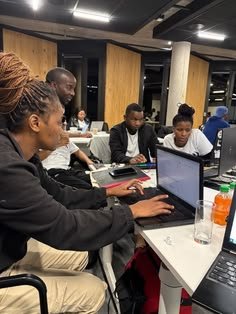
3. Evidence of Your Work Is Powerful
Saying that you have a skill is useful.
Showing it is even better.
This is where a portfolio becomes important.
A portfolio can include:
- Websites you have built
- Designs you have created
- Reports or business plans
- Photography or video work
- Software projects
- Marketing campaigns
- Bookkeeping exercises
- Technical projects
A strong portfolio gives employers something concrete to evaluate.
It helps move the conversation from
“I studied this.”
to:
“Here is what I can do.”
For many careers, that proof can make a big difference.

4. Communication Skills Are Still Essential
Technical skills are important, but employers also need people who can communicate clearly and professionally.
That includes:
- Speaking clearly
- Writing professional emails
- Listening carefully
- Asking useful questions
- Presenting ideas
- Explaining problems
- Responding to feedback
A programmer needs to understand what a client wants.
An accountant may need to explain financial information.
A project manager needs to coordinate people.
A marketer needs to understand customers.
No matter the profession, communication affects how well you work with others.

5. Problem-Solving Ability Sets Candidates Apart
Real workplaces are full of unexpected situations.
A system stops working.
A customer complains.
A deadline changes.
A client changes their mind.
A project runs into a problem.
Employers value people who can think clearly instead of waiting to be told every next step.
Problem-solving means being able to:
- Understand what is wrong
- Identify possible solutions
- Make sensible decisions
- Ask for help when necessary
- Learn from mistakes
This skill develops through practice.
The more real or realistic problems you work through, the stronger your judgment becomes.
6. Professionalism and Reliability Matter
Employers do not only hire skills.
They hire people they need to trust.
Professionalism includes:
- Arriving on time
- Meeting deadlines
- Keeping commitments
- Communicating early when there is a problem
- Respecting colleagues
- Taking responsibility
- Following instructions carefully
- Maintaining a good attitude
Someone can be very talented but still be difficult to work with if they are unreliable.
For employers, consistency matters.
Your reputation is often built through small habits.

7. Adaptability and Continuous Learning Are Becoming More Important
The workplace is changing quickly.
Technology changes.
Tools change.
Industries change.
Customer expectations change.
That means the skills you learn today may need to be updated later.
Employers increasingly value people who are willing to keep learning.
That can mean:
- Taking short courses
- Learning new software
- Attending workshops
- Reading industry material
- Practicing new skills
- Learning from mentors
- Improving after feedback
A certificate or degree should not be the end of learning.
It should be the beginning of a longer professional journey.

So, Is a Certificate or Degree Still Enough?
A certificate or degree is still valuable.
It can help you meet entry requirements.
It can show that you completed structured learning.
It can give you knowledge and credibility.
But in today’s workplace, the strongest candidates often bring more than a qualification.
They bring:
- Practical skills
- Relevant experience
- Proof of ability
- Communication skills
- Problem-solving ability
- Professionalism
- Adaptability
That is why employability is increasingly about the combination of:
Qualification + Skills + Experience + Attitude
What Should Students and Graduates Do?
Do not wait until you finish your course before thinking about employability.
Start building while you are still learning.
If you study web development, build websites.
If you study design, create a portfolio.
If you study accounting, practice with realistic financial records.
If you study digital marketing, create campaigns.
If you study project management, participate in real projects.
If you study a technical skill, spend as much time as possible applying it.
Every project gives you another answer when an employer asks:
“What can you do?”
What can we help you do?
At Weproe Africa, the focus goes beyond simply completing a qualification.
The goal is to help learners build relevant knowledge, practical ability, professional confidence, and career-ready skills.
Weproe offers programs across areas such as information technology, business and management, accounting, engineering, and practical professional skills.
The aim is not just to help learners study.
It is to help them prepare for the real world of work.
Final Thought
A qualification can help open the door.
But what you can do once the door opens is what matters most.
Employers are looking for people who can contribute, communicate, solve problems, learn, and adapt.
So as you work towards your next certificate or degree, ask yourself:
What am I building alongside it?
Because in today’s workplace, your qualification may get attention.
Your ability is what proves your value.
Explore. Learn. Evolve.
At Weproe Africa, learning is about more than completing a course. It is about developing relevant skills, confidence, and practical ability for today’s workplace and tomorrow’s opportunities.
Leave a Reply