
Artificial intelligence is no longer something we only hear about in technology conversations.
AI tools are already being used to write and analyse information, create content, automate repetitive tasks, support customer service, develop software and help businesses make decisions.
For some people, this creates excitement.
For others, it creates a much bigger question:
“Will AI take my job?”
It is a reasonable question. But there is another question that may be more useful:
“How can I prepare myself for a workplace where AI is becoming part of the job?”
The International Labour Organization estimates that around one in four workers globally are in occupations with some degree of exposure to generative AI. However, its research indicates that transformation of jobs is generally more likely than complete replacement because many occupations still require human involvement.
That means the conversation should not only be about whether AI will replace people.
It should also be about how people can adapt.
AI Is Changing Work — Not Just Eliminating Work

When new technology arrives, it often changes how work is done.
Think about how businesses moved from paper records to computers, how communication moved from letters to email and how marketing moved from traditional advertising to social media and digital campaigns.
AI is another major shift.
Some tasks that previously took hours can now be completed much faster with the right tools. At the same time, new responsibilities are emerging around managing technology, checking information, solving problems, communicating with customers and making decisions.
The ILO’s recent research describes this as a transformation of work rather than simply a story of jobs disappearing.
The important question is therefore not:
“How do I compete against AI?”
It is: “How do I become someone who knows how to work effectively with AI?”
Don’t Compete With AI at What It Does Best

AI can process large amounts of information quickly.
It can generate drafts.
It can identify patterns.
It can automate repetitive tasks.
But that does not mean every part of a job can simply be handed over to a machine.
People still need to understand situations, communicate with others, make decisions, take responsibility and understand the needs of customers and organisations.
For example, imagine a digital marketer using AI to generate ten social media captions.
The AI may produce the first drafts quickly.
But someone still needs to decide:
- Which message fits the audience?
- Is the information accurate?
- Does the content represent the brand?
- Does it make sense for the Zimbabwean market?
- What should the business actually say?
- How should the campaign be improved after looking at the results?
The tool can assist with the work.
The person still needs to know what good work looks like.
Learn How to Use AI as a Tool

One of the biggest mistakes someone can make is simply ignoring AI because it feels threatening.
Instead, start learning.
You do not necessarily need to become an AI engineer.
You can begin by understanding how AI tools can support the work you already do.
For example:
A marketer can use AI to brainstorm campaign ideas, organise research, analyse information and develop content drafts.
A business owner can use AI to help with customer communication, research, planning and documentation.
A developer can use AI to assist with coding, debugging, documentation and learning.
A student can use AI as a learning assistant while still developing their own understanding of the subject.
An administrator can use AI to help organise information, draft documents and automate repetitive processes.
The goal is not to let AI do everything.
The goal is to understand where AI can make you more effective.
Strengthen the Skills AI Cannot Easily Replace

Learning AI is important, but AI skills should not be your only focus.
The workplace still needs people who can think critically, communicate clearly, solve problems, collaborate and adapt.
The World Economic Forum’s Future of Jobs Report 2025 found that employers expect significant changes in workers’ core skills through 2030, reinforcing the importance of continuous learning and reskilling.
This means you should think about building a combination of skills.
Digital skills
Understand the tools and technologies used in your industry.
Communication
Learn how to explain ideas clearly through writing, speaking, presentations and digital communication.
Critical thinking
Do not automatically believe everything an AI tool produces. Learn how to question, verify and improve information.
Problem-solving
Technology can provide suggestions, but people still need to understand problems and decide what should actually be done.
Creativity
AI can generate ideas, but people still provide context, direction, taste and judgement.
Adaptability
Perhaps one of the most important skills is being willing to learn when your industry changes. The ILO’s 2026 report similarly identifies adaptability, resilience, AI literacy and broader digital and cognitive skills as increasingly important as AI changes workplace tasks.
Keep Learning Instead of Standing Still
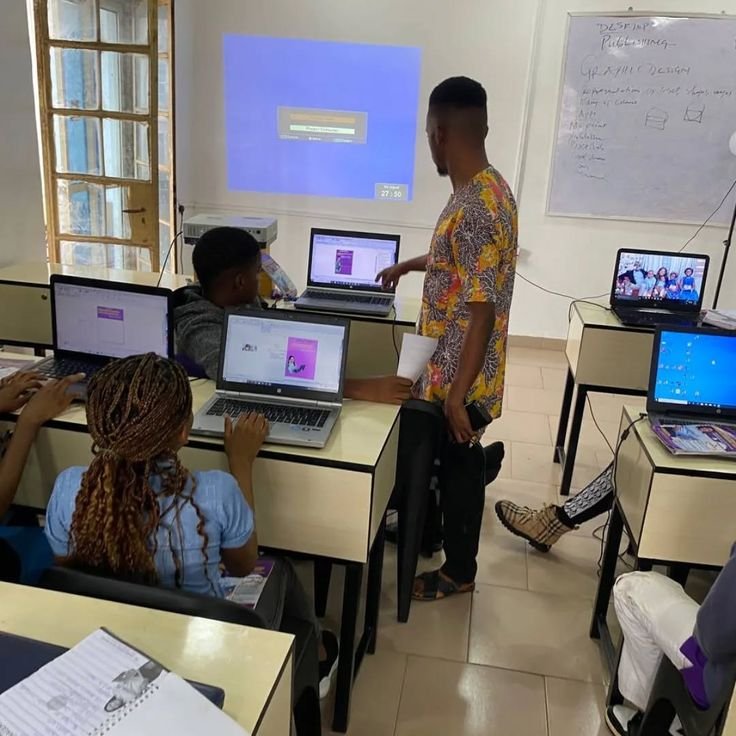
One qualification or skill set may not be enough for an entire career. That does not mean you need to constantly collect certificates. It means you should develop a habit of learning.
If you work in marketing, learn how AI is changing marketing.
If you work in IT, understand how AI is changing software development and technology support.
If you run a business, learn how AI can improve your operations.
If you are looking for employment, identify the tools increasingly used in the type of work you want to enter.
The people who adapt are not necessarily the people who know everything.
They are often the people who are willing to keep learning.
Build Evidence of What You Can Do
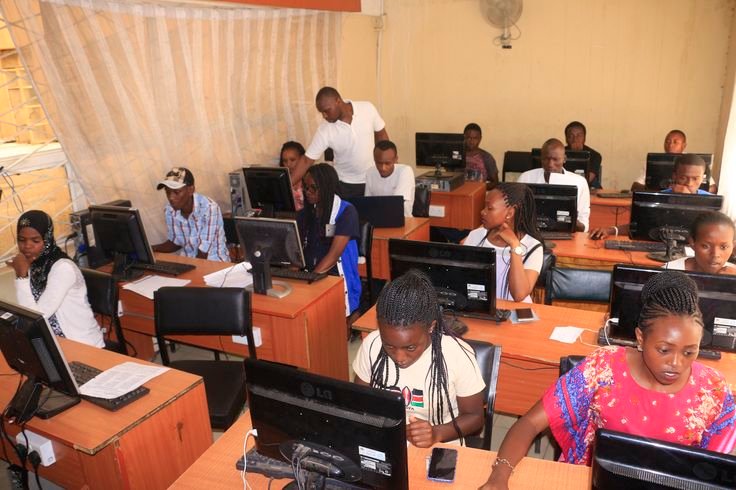
Learning a skill is only part of the process.
You should also be able to demonstrate it.
Instead of only saying:
“I know digital marketing.”
You could show:
- a social media campaign you created
- a website you designed
- a marketing strategy you developed
- an email campaign you built
- a portfolio project
- a data analysis project
- a business problem you solved
- a piece of content you produced using digital tools
This is particularly important for students and job seekers.
Your certificate tells someone what you studied.
Your portfolio can show them what you can actually do.
Think About Where Your Industry Is Going
You do not have to predict exactly what the workplace will look like five or ten years from now.
Instead, pay attention to the direction your industry is moving.
Ask yourself:
What tools are companies beginning to use?
What tasks are becoming automated?
What skills are employers asking for?
What problems are businesses trying to solve?
What skills could make me more useful in that environment?
These questions can help you identify where you should invest your learning time.
Turn Fear Into a Learning Plan
If AI worries you, do not stop at the worry.
Turn it into action.
Start with the work you already understand.
Step 1: Identify your current skills
Write down what you can already do.
Step 2: Identify how AI is affecting your industry
Look at the tools and processes being introduced.
Step 3: Find your skills gap
What can people in your field do that you cannot currently do?
Step 4: Choose one skill to learn
Do not try to learn everything at once.
Step 5: Practise
Create projects that allow you to use the skill.
Step 6: Document your work
Add strong projects to your CV, portfolio or professional profiles.
Step 7: Keep improving
Technology will continue to change.
Your learning should continue too.
What This Means for Students and Job Seekers in Zimbabwe
or students and job seekers in Zimbabwe, the changing workplace presents both challenges and opportunities.
Digital skills can help people participate in an increasingly technology-driven economy, but access to technology, infrastructure and training also matters. The ILO notes that infrastructure limitations, digital skills gaps and technology costs can affect how quickly AI’s potential benefits are realised, particularly in lower-income economies.
This makes practical learning especially important.
Instead of asking only:
“Which qualification should I get?”
also ask:
“What can I actually do with the skills I am learning?”
Can you build something?
Can you market something?
Can you analyse something?
Can you solve a business problem?
Can you use modern digital tools?
Can you communicate professionally?
These are questions worth considering when preparing for the future workplace.
The Future May Belong to People Who Adapt
Nobody can say with certainty exactly which jobs AI will change, which tasks will disappear or which new roles will emerge.
What we can see is that AI is already changing how many people perform their work.
That makes adaptability increasingly important.
You do not have to become an AI expert overnight.
You do not have to know every new tool.
You simply need to start.
Learn.
Experiment.
Practise.
Build.
Improve.
And keep paying attention to where your industry is going.
Don’t focus only on whether AI will replace your job. Focus on how you can become better prepared to work alongside it.
How WEPROE Can Help You Prepare
At WEPROE, learners can explore professional programmes designed around practical and industry-relevant skills.
The current course catalogue includes programmes in areas such as Artificial Intelligence, No-Code Systems & Digital Productivity, Digital Marketing & Strategic Communications, Web Technologies & Front-End Development, Software Development, Cyber Security, Digital Media and Business Management.
For someone preparing for a changing workplace, the important thing is not simply to collect qualifications.
It is to build skills that you can apply.
Explore the available programmes and identify an area that can help you move your skills forward.
The workplace is changing. Your learning can change with it.
Frequently Asked Questions
Will AI replace all jobs?
No one can reliably say that AI will replace all jobs. Research from the ILO indicates that many occupations are more likely to experience transformation of tasks than complete replacement, although the effects will differ across occupations and countries.
What skills should I learn because of AI?
Consider developing a combination of AI and digital skills alongside communication, critical thinking, problem-solving, creativity and adaptability. The exact combination depends on your career or industry.
Do I need to become a programmer to work with AI?
No. AI is being used across many different professions. You can begin by learning how AI tools apply to your existing field.
How can students prepare for an AI-driven workplace?
Students can start by developing digital skills, learning how to use AI responsibly, building practical projects and creating a portfolio that demonstrates what they can do.
Is learning AI worth it if technology keeps changing?
Learning specific tools is useful, but learning how to learn and adapt may be even more valuable. Tools will change, so understanding the principles behind using technology effectively can help you adapt to new tools.
Where can I start learning digital and AI-related skills?
Start by identifying the skills relevant to your career goals and then look for practical training that allows you to apply those skills. WEPROE currently offers programmes covering AI and digital productivity, digital marketing, web technologies, software development, cybersecurity and other professional areas.
Final Thought
AI is changing the workplace.
Ignoring that change will not make it disappear.
But neither should fear prevent you from preparing for it.
The most useful question may not be:
“Will AI take my job?”
It may be:
“What can I learn today that will help me contribute more effectively tomorrow?”
Ready to build skills for the changing workplace?
Explore WEPROE’s professional programmes and find a course that matches your career goals.
Leave a Reply